

As a complement to my Grassland Birds of North America Coloring Book, I wanted to post some pictures and information about some of these interesting birds.
Grassland Locations
Before we get to the bird list, let’s learn a little more about grasslands. The grasslands of North America are primarily composed of the Great Plains, which stretch from Canada through the central United States and into northern Mexico. These vast open areas include prairies, steppes, and savannas, characterized by wide expanses of grasses with few trees. There are three main types of grasslands:
Shortgrass Prairie: Found in the western regions of the Great Plains, extending into Colorado, Wyoming, and New Mexico. These drier areas support shorter grasses due to less rainfall.
Tallgrass Prairie: Found in the eastern portion of the Great Plains, particularly in parts of Kansas, Oklahoma, and Texas. These areas receive more rainfall, supporting taller grasses.
Mixed-Grass Prairie: Located in the central regions of the plains, including Nebraska, South Dakota, and portions of Canada. It is a transition zone between tallgrass and shortgrass prairies.
Grassland Birds
Now let’s take a look at some grassland birds.
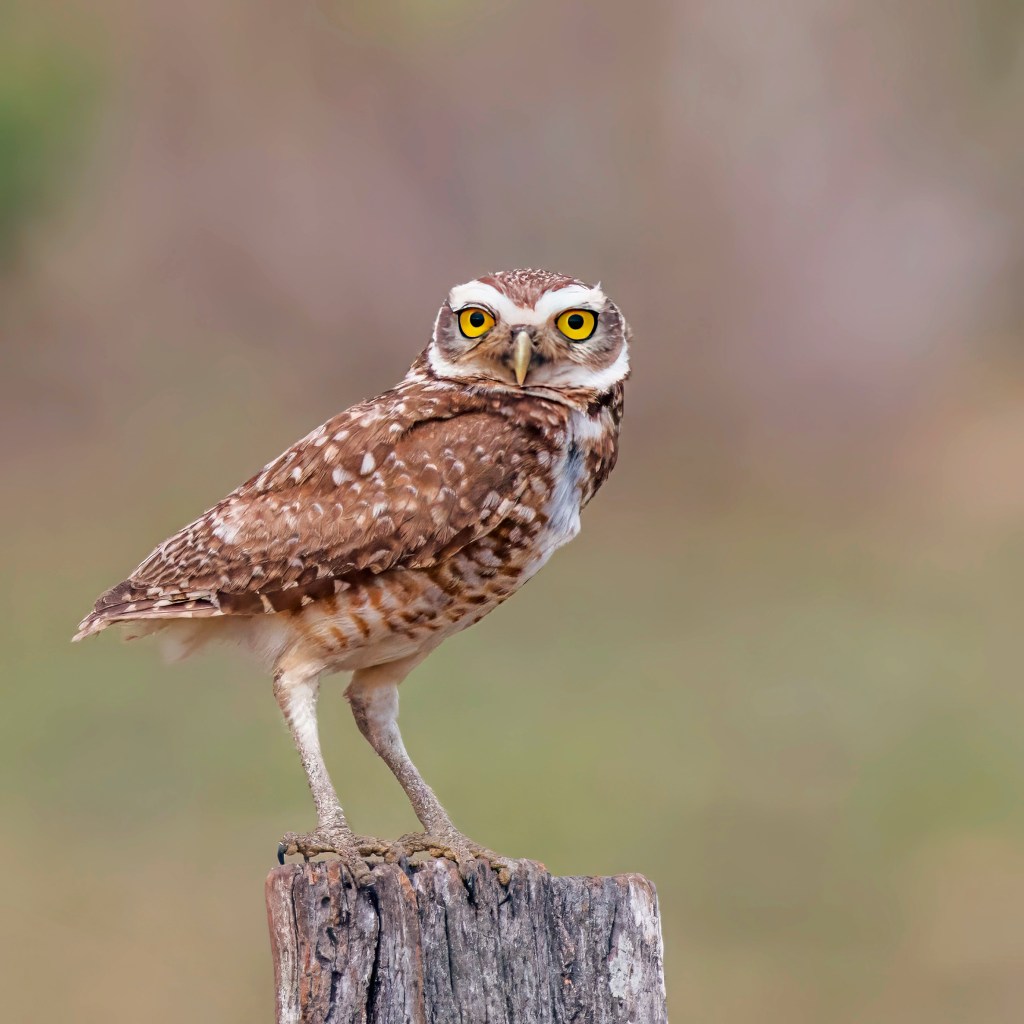
Burrowing Owl: The Burrowing Owl is a small, ground-dwelling bird with striking yellow eyes and long legs. Unlike most owls, it is active during the day and often seen perched near burrows or open fields. With its brown and white speckled plumage, this owl blends into the dry landscapes it inhabits. Burrowing Owls are known for their curious, watchful behavior and are often spotted bobbing their heads as they observe their surroundings.
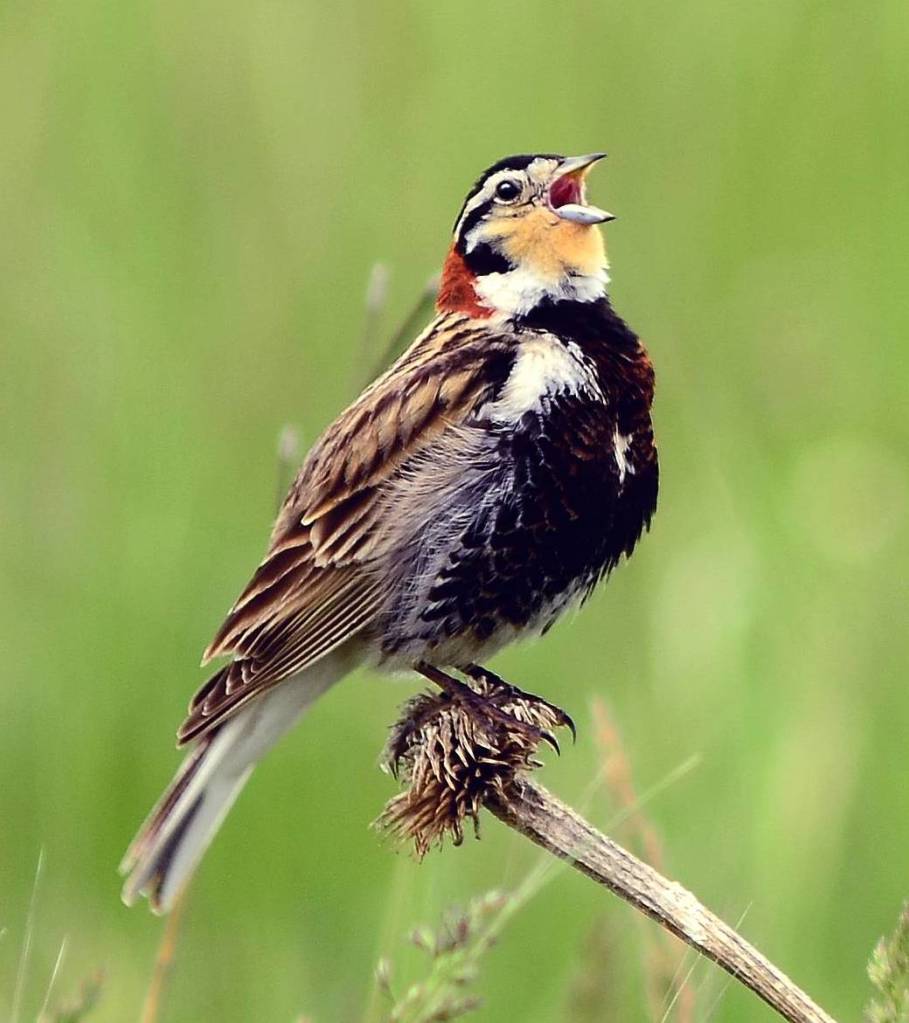
Chestnut-Collared Longspur: The Chestnut-Collared Longspur is a small bird found in open grasslands, recognizable by its chestnut-colored nape and streaked brown plumage. Males sport a striking black and white face pattern during the breeding season. These ground-dwelling birds are known for their delicate flight displays and chirping songs, which they use to attract mates and defend territory.

Common Nighthawk: The Common Nighthawk is a nocturnal bird with long, pointed wings and a mottled gray and brown body, which helps it blend into its surroundings. Often seen swooping through the air at dusk or dawn, nighthawks catch insects mid-flight with their wide mouths. Their distinct call, a nasal “peent,” is often heard before the bird itself is seen, and their erratic flight pattern adds to their mysterious presence.
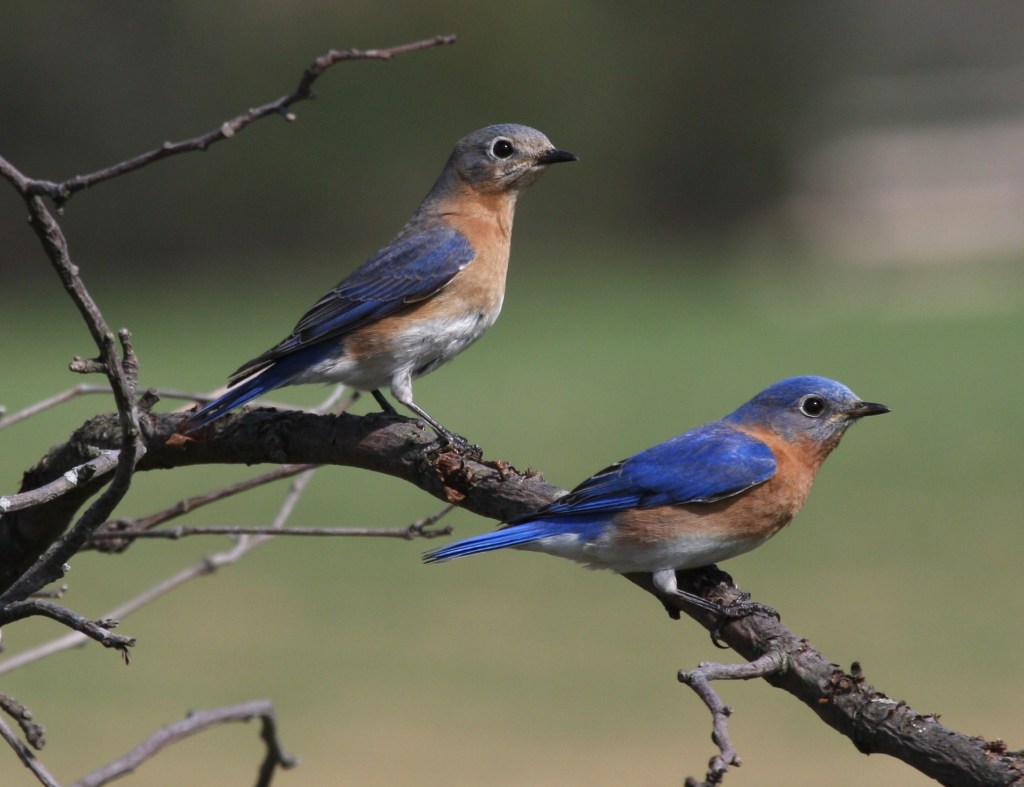
Eastern Bluebird: The Eastern Bluebird is a small, brightly colored bird with vibrant blue wings and head, contrasting with a rusty red chest and white belly. Males are especially striking, while females have more subdued colors. Known for their cheerful songs, Eastern Bluebirds are often seen flitting around open fields, wood edges, and suburban gardens, particularly around nest boxes.

Eastern Meadowlark: The Eastern Meadowlark is a medium-sized songbird with bright yellow underparts and a distinctive black “V” on its chest. Its brown-streaked back provides excellent camouflage in the grasslands and open fields it calls home. Meadowlarks are known for their flute-like song, often sung from fence posts or tall grasses, bringing a peaceful tune to rural landscapes.
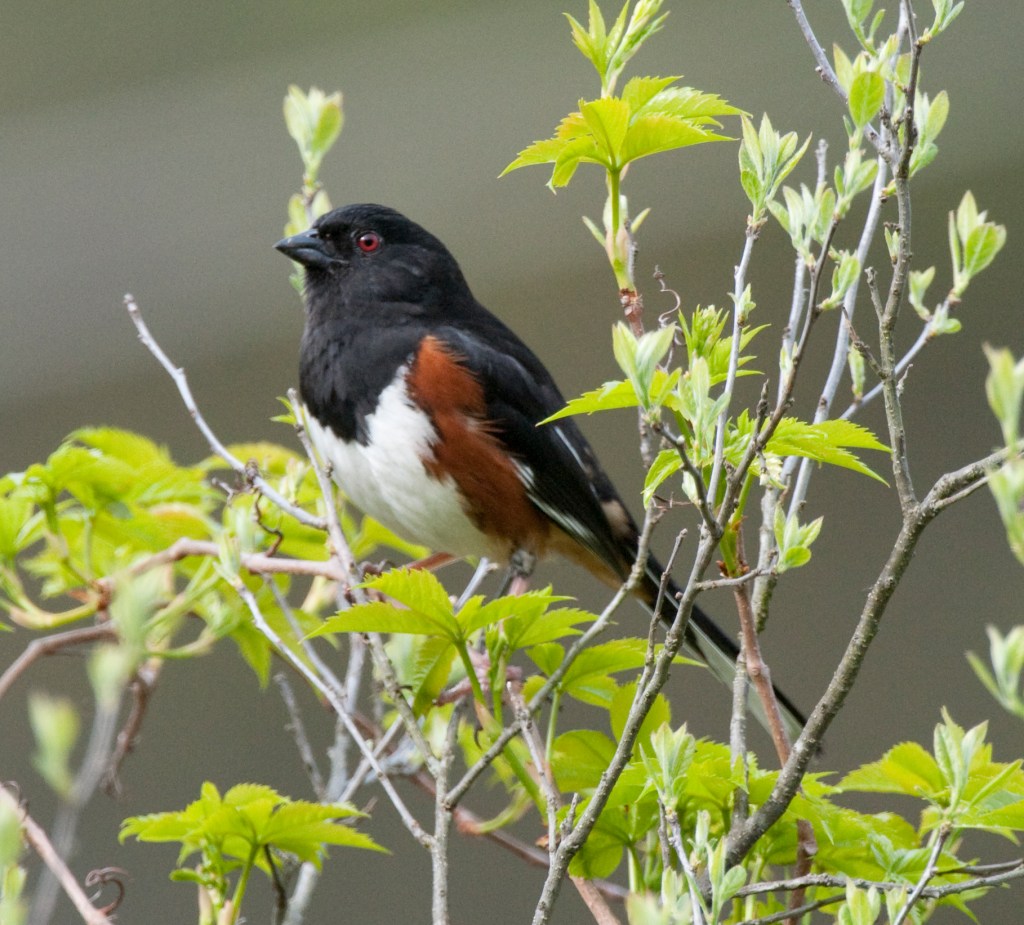
Eastern Towhee: The Eastern Towhee is a striking bird with a black head and back (in males), bright rufous sides, and a white belly. Females are brown where males are black. Known for their distinctive “drink-your-tea” song, towhees are often spotted foraging on the ground in wooded areas, scratching through leaves to uncover seeds and insects.
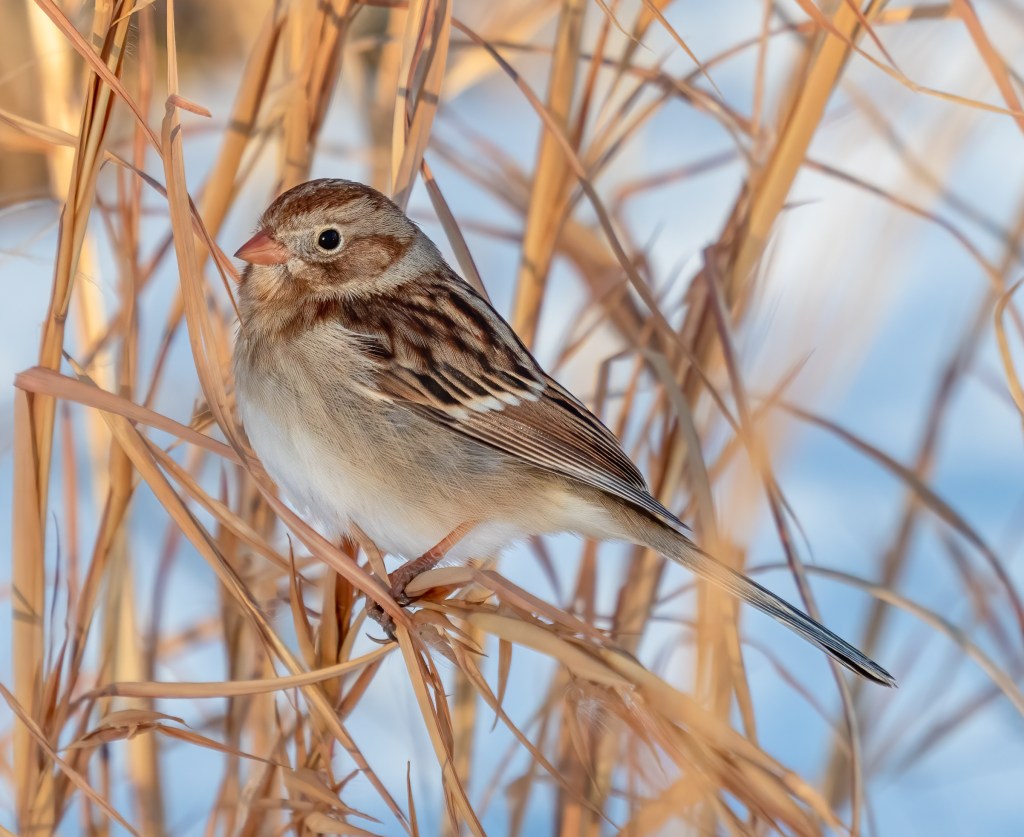
Field Sparrow: The Field Sparrow is a small, delicate bird with a pink bill, gray face, and soft brown body with streaks of white on the wings. These sparrows are found in open fields and meadows, often heard before they’re seen, with their clear, descending whistles. They prefer habitats with low shrubs or grasses, where they forage for seeds and insects.
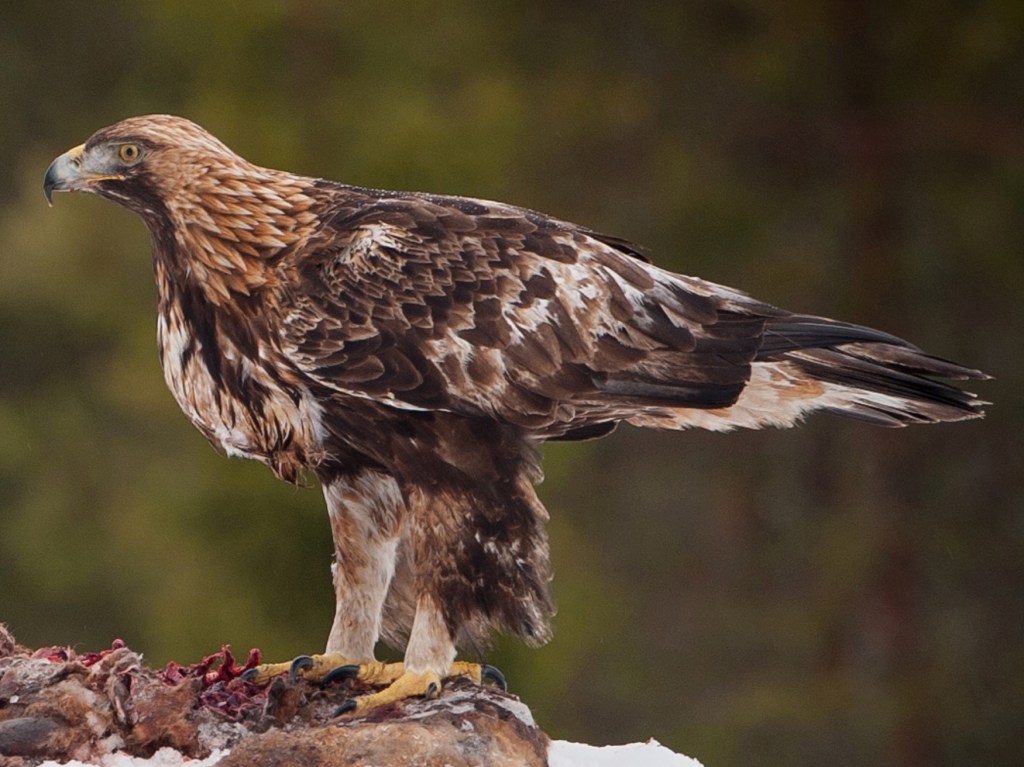
Golden Eagle: The Golden Eagle is a majestic bird of prey, recognized for its dark brown feathers with golden hues on the back of its head and neck. These powerful birds soar gracefully through the sky, hunting in wide-open spaces like mountains, grasslands, and deserts. With their keen eyesight and sharp talons, Golden Eagles are skilled hunters, often preying on small mammals.

Greater Roadrunner: The Greater Roadrunner is a long-legged bird famous for its speed, running swiftly across deserts and scrublands. With its streaked brown and white plumage and distinctive head crest, it’s a well-known symbol of the American Southwest. Roadrunners are opportunistic hunters, feeding on insects, small reptiles, and even snakes, and are often spotted darting across the ground in search of prey.

Red-Winged Blackbird: The Red-Winged Blackbird is known for its striking black body and bright red and yellow shoulder patches, especially prominent in males. Females, on the other hand, have a brown, streaked appearance. These birds are known for their distinctive, loud “conk-la-ree” song, which echoes through marshes and fields.
If You Would Like A Coloring Book Featuring These Birds And Many More, Click Here To Purchase!
 BJ's Blog
_Rio_Negro.jpg)
_(cropped).jpg)
.jpg)


_(cropped).jpg)
_by_Jarkko_J%C3%A4rvinen_(crop).jpg)


Leave a comment